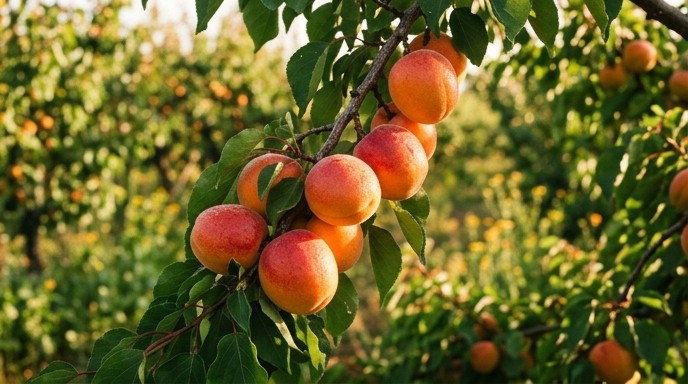
A ripe, sun-warmed apricot plucked straight from the branch is one of the ultimate and most desired tastes of true summer. However, growing a healthy tree that consistently yields large fruits without getting sick can be tricky. Apricots are notoriously finicky about spring frosts and stagnant moisture, but proper care can work miracles.

To produce such large and sweet fruits, the tree requires full sun and proper canopy training.
A healthy apricot tree can actively bear fruit for 10 to 15 years, and under ideal conditions, much longer. In this guide, we will break down all the steps: from choosing the good spot for your sapling to protecting your valuable harvest from insidious pests.
Ideal Conditions: Soil, Sun, and Space
The apricot is a classic southern crop that values heat and light above all else. Here are the basic requirements for successful growth and fruiting:
- Sunlight: The tree requires absolute full sun. Shade not only catastrophically reduces yields and results in small, sour fruits, but it also provokes the development of dangerous fungal diseases due to poor canopy ventilation.
- Soil: The best choice is deep, moisture-retaining, yet exceptionally well-drained soil with a slightly alkaline reaction (pH 6.5–7.5). Waterlogging near the roots is the apricot's biggest enemy.
- Space: Standard-sized varieties need room to spread. The optimal planting scheme for classic apricots is 6x6 meters (20x20 feet). This ensures sufficient air circulation between the trees.
- Frost Resistance: The trees themselves tolerate winter cold quite well. The real threat is late spring frosts, which can destroy the early blossoms overnight. Choose regionally adapted, late-blooming varieties.
Planting Rules and Companion Plants
The best time to plant an apricot is during its dormancy period: from late autumn (after all leaves have fallen) to early spring (strictly before the buds break). When preparing the planting hole, remember the gardener's golden rule: a wide hole is always better than a very deep one, as roots primarily grow outward.
After planting, wrap the trunk of the young sapling with a protective plastic mesh or garden tree wrap to protect the tender bark from mice, rabbits, and boring insects during the winter.
Orchard Hack: Sow clover or other legumes in the aisles of your fruit garden. This will not only enrich the soil with nitrogen (supporting natural fertility) but will also attract bees and other beneficial pollinators right when your apricot is in full bloom.

Apricots bloom very early, making the tree a frequent victim of sudden spring frosts.
Solving Major Problems: Diseases and Pests
Apricots are highly sensitive to growing conditions, and any stress immediately reflects on the tree's health.
- Gummosis and Branch Dieback: The exudation of thick, sticky amber sap on the trunk is the tree's cry for help. This is usually the result of severe stress (poor overwintering, lack of moisture, heavy clay soil). You can fix this by improving cultural practices: regular watering, generous mulching, phosphorus and potassium feeding, and harsh sanitary pruning of affected branches back to healthy, live wood.
- Brown Rot (Monilinia): A particularly dangerous disease in regions with wet, rainy springs. Flowers and young leaves suddenly wilt and look as if scorched by fire (blossom blight), and in summer, the fruits become covered with gray mold cushions. Preventative spraying with organic or copper-based fungicides (strictly before and right after blooming) is essential for control.
Warning: Fruit Flies and Rotten Apricots
Sweet, ripe apricots that have fallen to the ground and begun to rot are the good incubator for Drosophila fruit flies. To stop the uncontrolled multiplication of this pest (just like when growing berry hybrids), follow a strict rule:
- Never throw infected or wormy fruits into an open compost pile! This will allow the fly to successfully complete its life cycle and return next year.
- The Solarization Method: Collect all fallen fruit, tie it tightly in a black plastic (trash) bag, and leave it in the bright sun for at least 7 days. The very high temperatures inside will destroy all eggs and larvae. Only after this can the sterilized mass be safely disposed of.
Harvesting the good Crop
It is best to harvest apricots when they have reached full ripeness right on the tree branch — this is when they accumulate maximum sugars. The fruit should feel slightly soft to the touch and separate very easily from the stem. If the apricots are dropping to the ground en masse, they are overripe (such fruits are best immediately turned into thick jam or homemade fruit leather).
Surround your apricot tree with care, shape its canopy in a timely manner, and protect it from spring frosts, and it will often reward you with baskets full of sunny, honey-sweet fruits!
A practical checklist before you use the advice
- confirm the rootstock, vigor, and mature size before planting;
- check the exact cultivar’s pollination needs and whether a potential partner overlaps in bloom;
- choose a site with good drainage and enough sun; prolonged waterlogging is harmful to many fruit crops;
- keep the graft union above soil unless guidance for the specific plant says otherwise;
- base pruning on tree age, fruiting habit, and canopy condition rather than calendar month alone.
Additional verified references: University of Minnesota Extension — Growing Fruit in Home Gardens; RHS — Grow Your Own Fruit, Vegetables & Herbs.