If it feels like your pepper seeds are taking forever to sprout, you are not alone. More often than not, they are simply missing two key elements: consistent heat and proper moisture. Here is how to germinate sweet, hot, and super-hot peppers much faster indoors.
Are you starting to panic because your pepper seeds still haven't sprouted after weeks of waiting? Trust me, many gardeners are surprised by how long it actually takes for these seeds to germinate, especially when it comes to hot varieties. While standard sweet pepper seeds might sprout in about a week under the right conditions (good seed-starting mix, proper drainage, and plenty of heat), hot peppers are a completely different story.

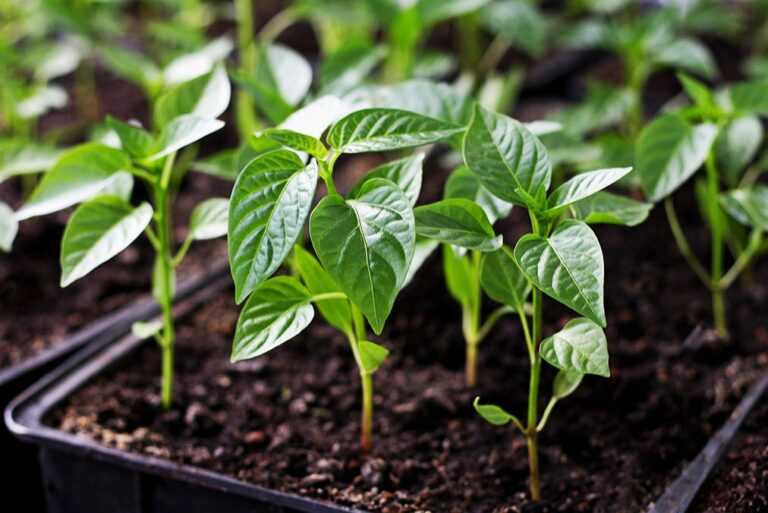
Sometimes you need a lot of patience to finally see these green shoots.
As you can see from our table below, hot and super-hot peppers sometimes take many weeks to wake up under the exact same conditions. They have an amazing ability to suddenly sprout long after you’ve completely given up hope.
| Pepper Type | Germination Time | Common Varieties |
|---|---|---|
| Sweet & Mild Peppers (Capsicum annuum var. grossum) |
7–10 days | Bell pepper, Jimmy Nardello, Paprika, Padrón, Pimiento, Shishito |
| Hot Peppers (Capsicum annuum, C. frutescens) |
1–4 weeks | Bird's Eye Chili, Cayenne, Jalapeño, Poblano, Serrano, Tabasco |
| Super Hot Peppers (Capsicum chinense) |
2–6 weeks | Carolina Reaper, Ghost pepper, Habanero, Piquillo, Scotch Bonnet, Trinidad Scorpion |
a key factor lies in their biology: super-hot peppers have significantly thicker seed coats and slower metabolic processes than sweet varieties, so naturally, they take longer to germinate. If you are starting to lose your patience, there is a commonly used way to speed up this process, and it begins with the right temperature.
Heat and Moisture Are Your Best Friends

Soil temperature, not air temperature, is what truly "wakes up" pepper seeds.
To break dormancy, all types of pepper seeds require two things: heat and consistent moisture. But pay attention — I am not talking about the air temperature in the room. Pepper seeds respond to soil temperature. A warm room or a sunny windowsill doesn't necessarily mean the damp soil in the pot will be warm enough (water evaporation cools the soil down).
While sweet peppers will eventually germinate at soil temperatures around 15°C (59°F), you will be waiting a very long time. The optimal range for a quick start for sweet peppers is between 18°C and 24°C (65°F to 75°F).
Hot and super-hot peppers, however, are true heat fanatics. They demand a much warmer soil environment: between 24°C and 32°C (75°F to 90°F). If the soil temperature drops below 24°C, germination time slows down drastically. Any temperature below 21°C (70°F) will cause the seeds of super-hot varieties to completely stall.
To achieve this level of heat (especially if you are starting seeds in a cooler room like a basement), I highly recommend using an inexpensive seedling heat mat paired with a clear plastic humidity dome. By the way, strong seedlings grown this way will adapt well if you plan to grow them in biointensive raised beds later.
Troubleshooting: Why Aren't My Peppers Sprouting?
If the clock is ticking and your trays are still empty, here are a few things to check immediately:
- Is the soil warm enough? For the best results, aim for a soil temperature between 26°C and 29°C (80°F to 85°F). Buy a simple kitchen or soil thermometer to ensure your mix is right in this sweet spot.
- Is the starting mix properly moist? The soil should be evenly moist, like a wrung-out sponge, but never waterlogged (there should be no puddles). Too much water will cut off oxygen and cause the seeds to rot before they can even sprout.
- Has enough time passed? A quick reminder: super-hot pepper seeds (like the Carolina Reaper) can take up to six weeks to germinate. You might just need to be a little more patient.
- Is the planting depth correct? This is a common beginner mistake. Pepper seeds should be planted very shallowly — only about 3 to 6 mm (1/8 to 1/4 inch) deep. If buried too deeply, the sprout simply won't have the energy to break through the surface.
Important Transplanting Rule
Once your pepper seeds have successfully sprouted, don't rush to move them to the garden. Wait until the seedlings have developed a few sets of true leaves (not the initial cotyledons). You should only transplant peppers outdoors when the nighttime temperatures consistently stay above 13°C (55°F). Be sure to harden them off for about a week before making the move.
A practical checklist before you use the advice
- confirm that the crop fits your frost-free season and available sunlight;
- check soil structure and drainage; a fine, uncompacted surface matters especially for small seeds;
- adjust sowing and transplanting dates to soil temperature, frost forecasts, and the cultivar’s days to maturity;
- water to avoid repeated swings from very dry to saturated soil;
- if the same problem returns each year, consider crop rotation rather than relying only on feeding or sprays.
Additional verified references: RHS — Grow Your Own; University of Minnesota Extension — Planting the Vegetable Garden.